
What do you think of when the word "plaid" is said?
Perhaps this?

Or this?

This pattern has thousands of years of history! Thanks to the Scottish, Celts, and Picts we have a fabulous pattern that has become a major part of the fashion industry.
Elizabeth Taylor 1951
the 2 following found here

Audrey Hepburn In "Sabrina" 1954

J. Crew Cover 1988
found here

And now almost everywhere you turn you can find plaid!
Found HERE


These pictures found here


The fashion industry has to be some of my favorite places to see the creativity with plaid.

Emma Watson, Brooklyn Decker, & Alexa Chung
Found HERE

Found HERE

Found HERE

Found here

Found on Pinterest:


Find this picture here

From http://www.thesartorialist.com/

Found here

Where is this from?
This pattern dates back to 100 BC, older than Christ! It originated in Ireland and Scottland, but wasn't the signature look of Scottland until the 17th century. The pattern used was an outfit called a tartan which would distiguish different clans and ranking in the highlands for many, many years.
Who wore it? Culture?
There is record in 1538 of King James V, the father of Mary Queen of Scots ordering and wearing this fabric. While the Romans were trying to take over Scotland, "the Caledonian tribesmen who opposed them wore
striped woollen cloaks, or blankets woven in several colours. These garments were draped
over a shoulder and pinned, while underneath was a linen tunic shirt and sometimes a pair
of truis or breeches." (quote found here) This rebelious movement against England was settled down when "the English Army routed the Highlands,
destroying the Highlanders' way of life, banning clan tartans and
destroying cloth-making equipment, including sett-sticks. Yet even at
their lowest ebb, the Highlanders rebelled, wearing trousers of their
tartan, subtly woven" (quote found here)
By the 1960's in America it was becoming a mans labor force shirt, but the lesbian movement tried to adopt the plaid pattern as a sign of peace. "As the women’s liberation movement was taking off, women — especially
lesbians — reclaimed the plaid shirt as a statement against the
arbitrary assignment of certain articles of clothing to the masculinity.
Plaid, they said, was not just for lumberjacks, but also for women, and
especially for women who like women, so take that, patriarchy." (quote found here) It didn't last long as the 90's became "the grunge scene" and according to one article it states "Mr. Conor Oberst of Bright Eyes fame" brought this look back into fashion. Since then many stores such as Gap, American Eagle, H&M and Topman have become the "norm" in our fashion today. (info found here)
When do you wear it?
We see this pattern anywhere! It has become a style that's recycled over and over again. Many times this pattern is a matter of personal taste. Some will be seen with it, some won't. It will probably be used for many years to come!
Classification
This pattern can be classified in every example.
Body Enclosure: Coat.
It is wrapping your body, suspended from your shoulders, preshaped with sleeves and a place for your head, has texture of rough wool, smelling a bit like old clothing, sounding scratchy.
Attachments to the body: Glasses
Color could be a wide variety of plaid, inserted to your ears, having a round or square shape, with smooth or bumpy texture.
Attachments to the Body Enclosures: Belt
Wide variety of colored plaid, clipped to your waist or hips, smooth or rough/scratchy to the touch, surface design as squares.
Handheld Objects: Umbrella
Variety of colored plaid, hand held, smooth feel, shiny handle, preformed shape and function for rain.
Sheldons Somatotypes
The great thing about plaid is that these Somatotypes could be applied to every person that wears this pattern because there is such variation in the pattern. Also, it is a fabric and is adaptable to any object There are dark, earthy, undertones of plaid that would fit the ectomorphic body type in being introverted, self-conscious, and artistic. On the other hand there are psychedelic, neon colors that would attract the more daring-- the Mesomorphic body type. These people desire more adventure, desire for power and dominance, courage, indifference to what others think or want, assertive, bold and love to take risks.
Siple's Concept of Clothing Zones
Plaid can be found in any zone. Here are some examples:
Minimum Layer Zone
This area is where it is humid, tropical and a jungle. The jungle areas probably don't have much fashion concerning plaid unless it came to a swim suit!
This area is where it is humid, tropical and a jungle. The jungle areas probably don't have much fashion concerning plaid unless it came to a swim suit!
Found HERE

The Hot Dry Zone
This would not be an area you aren't likely to find plaid because the temperatures would be so extremely hot in a desert area. The people would want to use light, breathable clothing that would protect them from the sun.
One Layer Zone
Would be an area that is subtropical and could get by with a t-shirt and shorts.
Plaid is very possible to wear in this climate.
Found HERE

Two Layer Zone
This is where the fun begins. Fashion really comes into play with temperate cool winters and an ability to use creativity with designs.
Found HERE

Three Layer Zone
This is where creativity continues, but we're going to be covering up just a little more.
Nice summers, pretty cool winters.
Found HERE
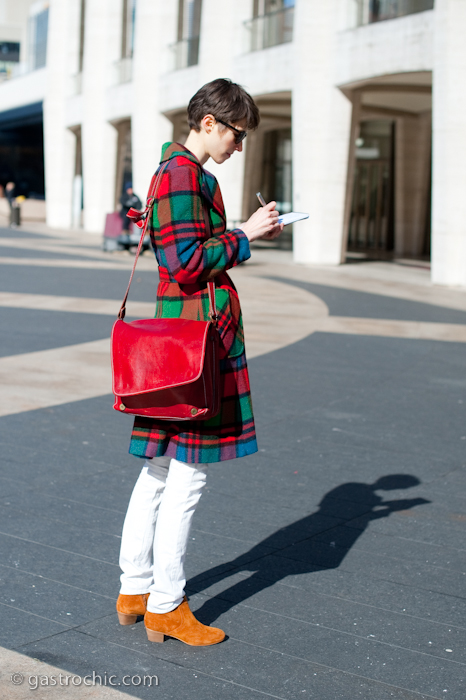
Four Layer Zone
This is where it gets chilly! Bitter winters, cooler summers, and lots of winter wear are used!
Found HERE
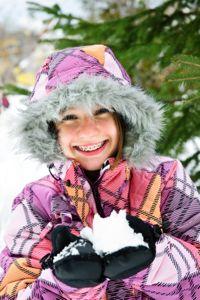
Five Layer Zone
This area would be hard to find those in a fashinable plaid because of the drastic cold!
You better find all you can to keep your body from freezing, no matter how ugly!

No comments:
Post a Comment